
Kenya’s landscape offers a dramatic spectrum, from the bustling urban center of Nairobi to the snow-capped summits of its namesake mountain. For those planning a visit in 2026, combining the high-altitude thrills of the central highlands with a clear understanding of the nation’s modernized entry protocols is the perfect formula for a successful journey.
Unveiling Mount Kenya National Park
Mount Kenya National Park is an extraordinary UNESCO World Heritage site, home to the second-highest peak in Africa. Rising to 5,199 meters (17,057 ft), the mountain is a dormant volcano that anchors the region’s diverse ecosystems. As you ascend from the tropical rainforests at the base to the barren, ice-covered peaks above, you pass through bamboo groves, heathlands, and alpine moorlands teeming with unique flora like the giant lobelia.
- Key Activities: Whether you are an experienced mountaineer looking for technical climbs like the Batian or Nelion peaks, or a casual hiker targeting the accessible Point Lenana (4,985m), the park caters to all levels. Day hikes, nature walks, and even high-altitude cave exploration at Shipton’s Caves are popular highlights.
- Best Time to Visit: To ensure better visibility and safer climbing conditions, aim for the two dry seasons: mid-January to February, and August to September.
- Planning Your Ascent: It is highly recommended to spend at least 3–4 days ascending the mountain to allow your body to acclimatize to the altitude, significantly reducing the risk of sickness. Professional guides are often compulsory for high-altitude treks.
For more in-depth advice on trekking routes, accommodation options like the iconic Serena Mountain Lodge, and practical tips, explore our TOURIST GUIDE TO MOUNT KENYA NATIONAL PARK.
Navigating the eTA: A Guide for First-Timers
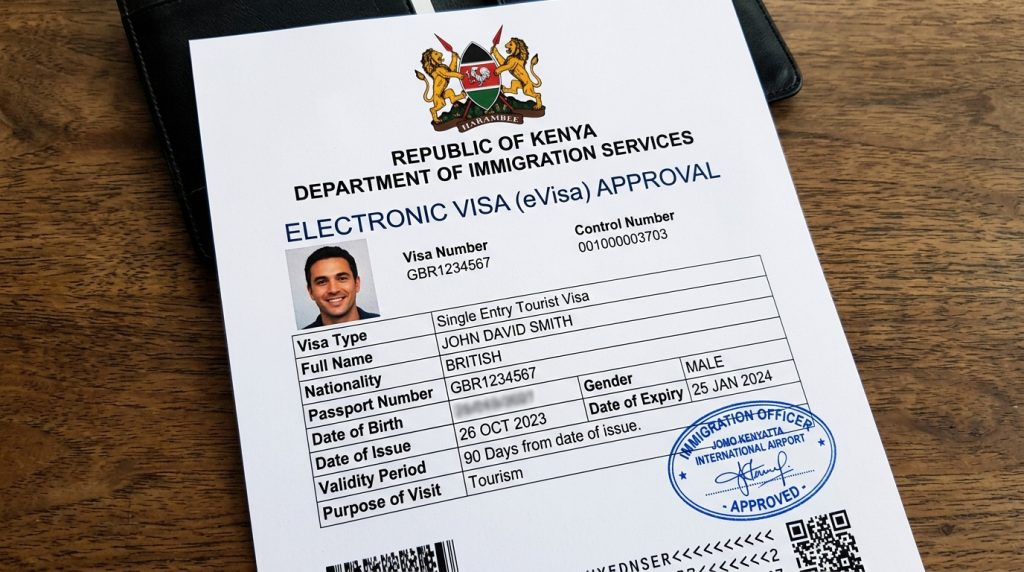
Kenya’s entry procedures are now fully digital. The Electronic Travel Authorization (eTA) system is the mandatory pre-travel permit for almost all international visitors. It is a semi-automated system that determines travel eligibility, and having an approved eTA is essential before you even board your flight.
Essential Guidelines for a Smooth Application:
- Timeline: Do not wait until the last minute. While processing typically takes about three days, it is strongly advised to submit your application at least two weeks before your scheduled departure to allow for any administrative reviews.
- Required Documentation: Have the following ready in digital format:
- A valid passport (minimum six months of validity and one blank page).
- A recent passport-style photograph or selfie.
- Confirmed travel itinerary (flight arrival and departure details).
- Proof of accommodation (hotel booking confirmation or an invitation letter from a host).
- The Process: Applications must be completed via the official eTA portal. Be wary of third-party websites that mimic the government portal, as these may lead to fraud or unnecessary fees.
- Admissibility: Remember that an approved eTA is your permission to travel to Kenya, but your final admissibility is determined by immigration officers upon your arrival at the border.
For comprehensive step-by-step instructions and a breakdown of common application hurdles, consult our ESSENTIAL GUIDELINES TO KENYA ETA REQUIREMENTS FOR FIRST TIME TRAVELERS.
