
In a busy society filled with relentless digital alerts and heavy workloads, finding an enduring state of mental clarity can feel like an elusive goal. Most people try to manage this internal exhaustion by turning to superficial coping mechanisms, such as short weekend getaways or temporary mindfulness apps. While these methods provide a brief moment of relaxation, they rarely reach the deep-seated cognitive habits that trigger our underlying fears. True psychological freedom demands a fundamental shift in how we look at our thoughts and experiences.
Deconstructing the Ego’s Thought System
For those looking for a systematic, uncompromising roadmap to emotional relief, the profound self-study framework known as a course in miracles has served as an essential guide for decades. Built entirely on a non-dualistic psychological philosophy, this curriculum teaches that all human suffering stems from the ego’s false belief in separation and lack. Rather than instructing students to alter their external environments or blame external events for their distress, it guides them to look completely inward at the hidden belief systems that govern their daily emotional reactions.
The core tool for this internal breakthrough is a radical practice of true forgiveness. In conventional terms, forgiveness usually means acknowledging that an offense occurred and choosing to overlook it—a perspective that subtly keeps the feeling of victimhood alive. Advanced mind training, however, reveals that what we perceive as external attacks are actually projections of our own unhealed subconscious minds. By shifting our internal vision from judgment to total understanding, we dissolve the grievance completely, stripping it of its power to disturb our peace.
Practical Mind Training for Contemporary Lifestyles
Although the theoretical concepts behind acim are deeply metaphysical, the actual curriculum functions as an intensely practical workbook. It is structured as a daily mental retraining program designed to be applied right in the middle of a busy modern routine. Students are never required to leave society, quit their careers, or adhere to rigid lifestyle rules; they are simply invited to change their minds about what they perceive.
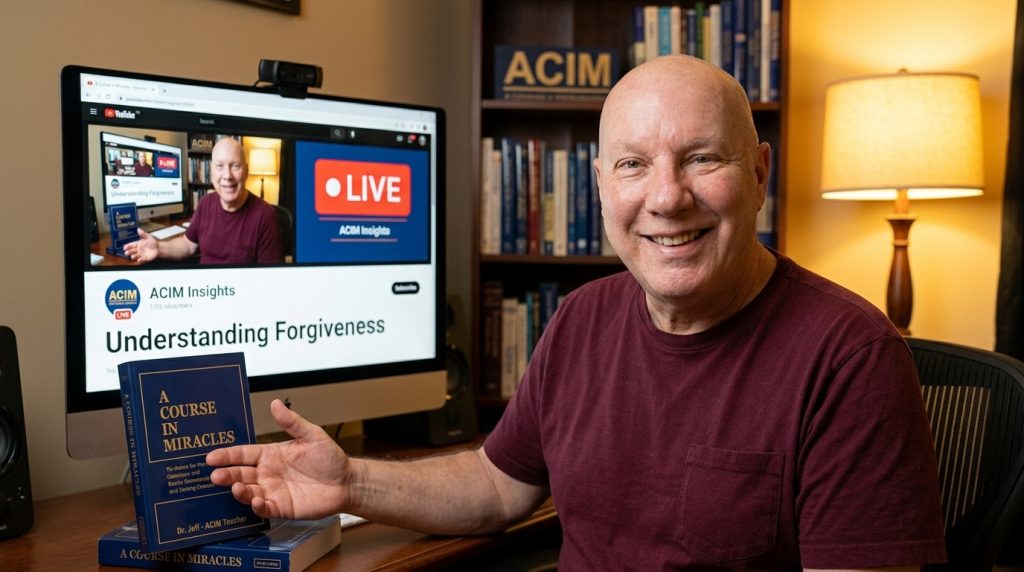
To bridge the gap between abstract text and practical application, contemporary seekers frequently utilize digital resources such as analytical video commentaries, online study communities, and global digital ministries. These modern tools break down complex lessons into highly manageable, daily insights. By working with these online resources, practitioners learn how to turn ordinary life stressors—such as workplace tension, economic uncertainties, or sudden schedule changes—into direct opportunities for psychological self-inquiry and genuine mental healing.
Healing Relationships from the Inside Out
The most immediate proving ground for this spiritual psychology is within our daily personal interactions. The ego naturally views relationships as transactions, using other people to secure external validation, build a sense of specialness, or project lingering internal guilt.
True forgiveness completely flips these relational dynamics upside down. Instead of viewing a family member, business partner, or friend as the source of our emotional upset, we begin to recognize them as a mirror showing us our own state of mind. Every grievance becomes a helpful indicator pointing to an area within ourselves that is calling for healing, paving the way for authentic, judgment-free communion with the world.
